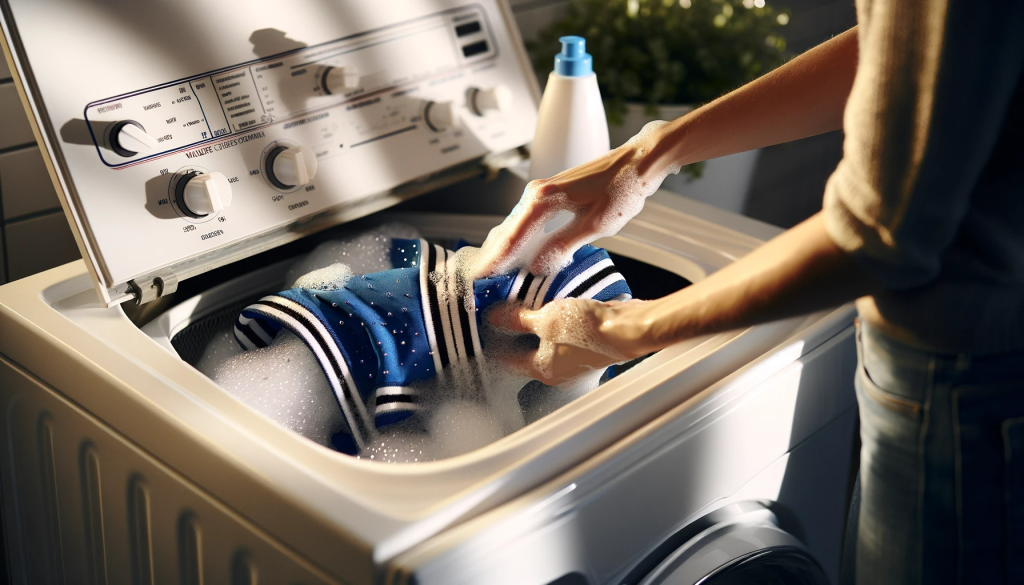

Understanding whether to use hot or cold water is crucial for effective stain removal, impacting everything from fabric longevity to your laundry’s appearance. At inktasticmerch.com, we delve into how temperature affects various stains, ensuring you can tackle any mess with confidence.
Why Does Hot Or Cold Water Matter For Stain Removal?
Both hot and cold water play crucial roles in laundry, but their effectiveness for stain removal varies significantly based on the stain type and fabric. Using the incorrect water temperature can lead to persistent stains, requiring rewashing and potentially damaging fabric texture and color. Hot water works by breaking down and dissolving stain-causing substances, making it effective for many common stains. Conversely, cold water inhibits the bonding of protein-based stains to fabric fibers, making it the preferred choice for stains like blood or baby food. For certain stains, such as those from fruit juice, urine, vomit, or tomato sauce, either hot or cold water can be effective, though fabric type and stain severity might influence the best choice.
A general guideline suggests that hot water is better suited for synthetic fabrics, while cold water is more appropriate for natural fabrics. However, this is not a universal rule, and specific stain types and fabric care labels should always be consulted.
<img class="filer_image
" alt="planetcare-23coWmkTNSg-unsplash.webp" loading="lazy" src="https://inktasticmerch.com/wp-content/uploads/2025/12/planetcare-23cowmktnsg-unsplash-webp680x453_q85_crop_subsampling-2_upscale.jpg” title=”planetcare-23cowmktnsg-unsplash-webp680x453_q85_crop_subsampling-2_upscale”>
When to Use Cold Water
Cold water is an excellent choice for stain removal, especially when combined with a quality laundry detergent. It is particularly beneficial for delicate fabrics that are prone to shrinking, fading, or losing their shape when exposed to higher temperatures. By choosing cold water, you not only protect the integrity of your garments but also contribute to environmental sustainability, as it requires less energy to heat water, thereby reducing your carbon footprint.
Cold water is highly effective for a range of common stains, including:
- Grass stains
- Ink stains
- Juice and milk stains
- Baby food stains
- Blood stains
- Water-based paint stains
- Egg stains
A key characteristic of many of these stains is their protein-based nature. For instance, blood contains proteins that can coagulate and become more difficult to remove when exposed to hot water. When dealing with stubborn blood stains where cold water alone might not be sufficient, a targeted approach can be beneficial:
- Prepare a solution by mixing two parts water with one part white vinegar.
- Submerge the blood-stained area in this solution for approximately 30 minutes.
- Gently blot or rinse the stain with a damp cloth. Avoid vigorous scrubbing, as this can spread the stain.
- If the stain persists, create a paste by mixing a tablespoon of laundry detergent with a cup of water. Apply this mixture to the stain and let it sit for about 15 minutes before blotting or rinsing.
It is important to note that while vinegar is an effective stain remover, repeated use of undiluted vinegar can degrade fabric fibers over time. Therefore, it should be used judiciously.
<img class="filer_image
" alt="point3d-commercial-imaging-ltd-u_iAyixU_SU-unsplash.webp" loading="lazy" src="https://inktasticmerch.com/wp-content/uploads/2025/12/point3d-commercial-imaging-ltd-u_iayixu_su-unsplash-webp680x453_q85_crop_subsampling-2_upscale.jpg” title=”point3d-commercial-imaging-ltd-u_iayixu_su-unsplash-webp680x453_q85_crop_subsampling-2_upscale”>
When to Use Hot Water
Hot water is particularly effective for tackling stains that are oily or greasy in nature. This includes common culprits like butter, cooking oil, and sweat. The heat helps to break down and liquefy these substances, making them easier to wash away.
Additionally, hot water can be beneficial for removing the following types of stains:
- Makeup stains
- Wine stains
- Lotions
- Gum residue
- Grease stains
For challenging stains like those from sweat, pretreatment and presoaking can significantly improve removal success. A recommended method involves soaking the affected garment in a mixture of half a cup of distilled white vinegar and one cup of hot water for about 30 minutes. After soaking, transfer the garment to the washing machine and run it on a hot water cycle.
<img class="filer_image
" alt="igor-rand-3J4HyvV9bwY-unsplash.webp" loading="lazy" src="https://inktasticmerch.com/wp-content/uploads/2025/12/igor-rand-3j4hyvv9bwy-unsplash-webp680x437_q85_crop_subsampling-2_upscale.jpg” title=”igor-rand-3j4hyvv9bwy-unsplash-webp680x437_q85_crop_subsampling-2_upscale”>
When to Use Cold or Hot Water
Certain fabrics and stain types are versatile enough to be treated with either hot or cold water. In such scenarios, many individuals opt for cold water due to its gentler impact on clothing fibers and its energy-saving benefits. This approach not only helps preserve the longevity and appearance of garments but also contributes to reduced utility costs and environmental impact.
Stains that can typically be addressed with either water temperature include:
- Tomato sauce stains
- Mud stains
- Fruit stains
- Chocolate stains
- Coffee stains
If a stain proves resistant after the initial wash, it may be necessary to rewash the garment. Gently rubbing the stained area before the second wash cycle can sometimes help dislodge stubborn residues.
<img class="filer_image
" alt="jan-antonin-kolar-QQNQjrKEl6w-unsplash.webp" loading="lazy" src="https://inktasticmerch.com/wp-content/uploads/2025/12/jan-antonin-kolar-qqnqjrkel6w-unsplash-webp680x510_q85_crop_subsampling-2_upscale.jpg” title=”jan-antonin-kolar-qqnqjrkel6w-unsplash-webp680x510_q85_crop_subsampling-2_upscale”>
How to Remove Oil-Based Stains
Oil-based stains present a unique challenge because oil and water do not mix. Unlike protein-based or dye-based stains, which can often be dissolved in water, oil molecules resist water’s cleaning action. Consequently, removing these stubborn stains requires specialized cleaning agents that can effectively break down and lift the oil from the fabric fibers.
The principle behind removing oil-based stains involves using substances with specific molecular structures that can attach to oil molecules and pull them away from the fabric. Several household and commercial solutions can achieve this:
Oxygen Bleach
For particularly stubborn stains, such as those from motor oil, oxygen bleach is a powerful solution. It works by releasing oxygen when exposed to water, a process that helps to lift oil from the fabric’s surface. Oxygen bleach is typically composed of hydrogen peroxide and sodium carbonate, making it effective for tough grease and oil.
Recommended usage:
- Prepare a solution of oxygen bleach and water according to the manufacturer’s instructions, which are usually found on the product packaging.
- Submerge the stained fabric in the solution. The soaking time can range from one hour to overnight, depending on the severity of the stain.
- After soaking, rinse the garment thoroughly.
- Proceed with a regular washing machine cycle.
Important Note: This method should only be used on fabrics that are safe for bleach. Using oxygen bleach on colored or delicate fabrics may lead to fading or damage.
Dishwashing Soap
Dishwashing soap is specifically formulated to cut through grease, making it an effective agent for removing oil-based stains from clothing. Its degreasing properties can be directly applied to laundry.
Application steps:
- Apply a generous amount of liquid dishwashing soap directly onto the oil stain.
- Gently rub the soap into the stain with your fingers.
- Allow the soap to penetrate the stain for 10 to 15 minutes.
- Rinse the treated area thoroughly with warm water.
- Wash and dry the fabric as you normally would.
Ensure all soap residue is completely rinsed out before placing the garment in the washing machine with other laundry to prevent potential issues.
Solvent-Based Cleaners
For persistent oil-based stains, solvent-based cleaners are often the most effective option. These cleaners are designed to dissolve oil and grease molecules directly.
How to use solvent-based cleaners:
- Carefully read and follow the instructions provided on the solvent-based cleaner’s label.
- Apply the cleaner directly to the stained area as directed.
- Allow the solvent to work on the fabric for a few minutes, ensuring it does not dry completely on the material.
- Rinse the treated area with warm water to remove the solvent.
- Run a standard wash cycle for the garment.
Crucial Consideration: Always check the garment’s care label for specific cleaning instructions before using any solvent-based cleaner, as some fabrics may require special handling.
<img class="filer_image
" alt="engin-akyurt-yCYVV8-kQNM-unsplash (3).webp" loading="lazy" src="https://inktasticmerch.com/wp-content/uploads/2025/12/engin-akyurt-ycyvv8-kqnm-unsplash_3-webp680x470_q85_crop_subsampling-2_upscale.jpg” title=”engin-akyurt-ycyvv8-kqnm-unsplash_3-webp680x470_q85_crop_subsampling-2_upscale”>
Experience Effortless Stain Removal with Rinse
Some stains are notoriously difficult to remove, persisting even after various cleaning attempts. For those particularly stubborn marks that resist conventional methods, professional laundry services offer a reliable solution. Services like Rinse specialize in tackling even the most challenging stains, leveraging expertise and advanced techniques to restore garments to their original condition.
Rinse provides a convenient laundry and dry cleaning service, handling the entire process from pickup to delivery. By entrusting your laundry needs to professionals, you can save time and effort while ensuring your clothes are impeccably cleaned and any tough stains are effectively treated. Simply schedule a pickup, and let the experts manage the rest.
<img class="filer_image
" alt="USE drop.webp" loading="lazy" src="https://inktasticmerch.com/wp-content/uploads/2025/12/use_drop-webp680x371_q85_crop_subsampling-2_upscale-1.jpg” title=”use_drop-webp680x371_q85_crop_subsampling-2_upscale-1″>
Have laundry or dry cleaning to do?
Rinse picks up, cleans and delivers 7 days a week. Amazingly awesome. Ridiculously simple.
Try Rinse
Armed with this knowledge, you’re well-equipped to tackle most laundry challenges, but there’s always more to discover in our comprehensive Blog section to keep your clothes looking their best.