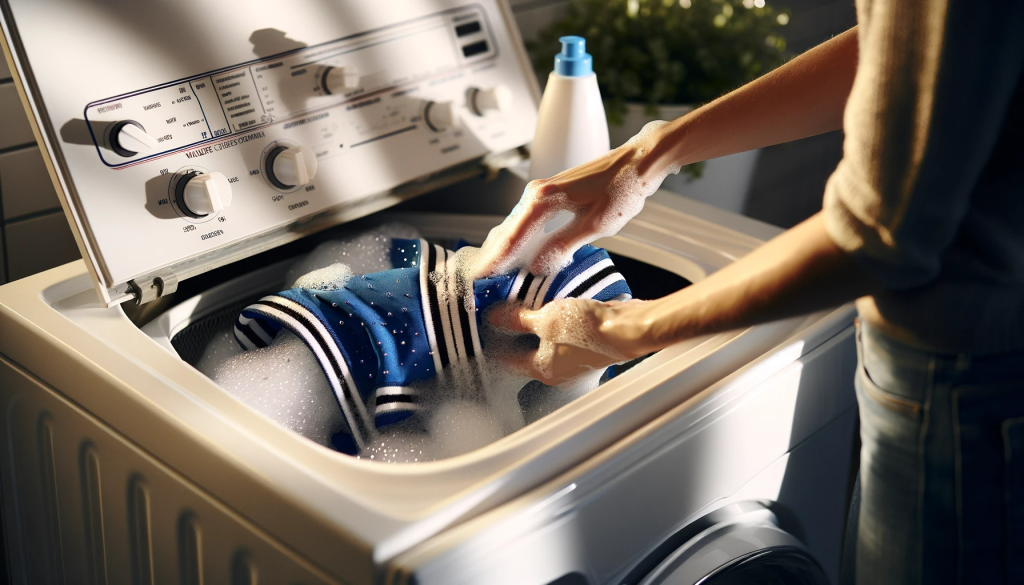
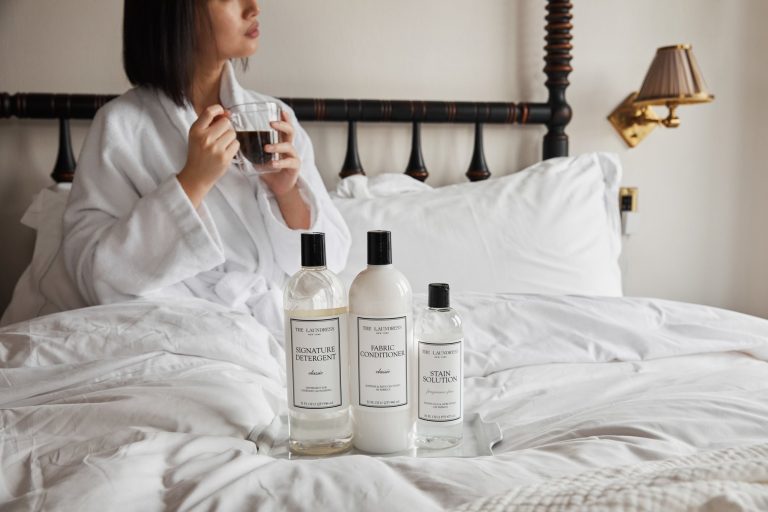
Elevate your laundry routine by understanding the ingredients in your detergent and how they tackle dirt and stains. Discover the power of enzymes and their role in deep cleaning your fabrics.
Ever found yourself pondering the vast array of laundry products? Which detergent reigns supreme? When should fabric softener make an appearance, or is it even essential? What are its benefits? Let’s unravel these common laundry mysteries.
Detergent, Stain Treatments & Laundry Soap
Understanding Laundry Detergent vs. Soap
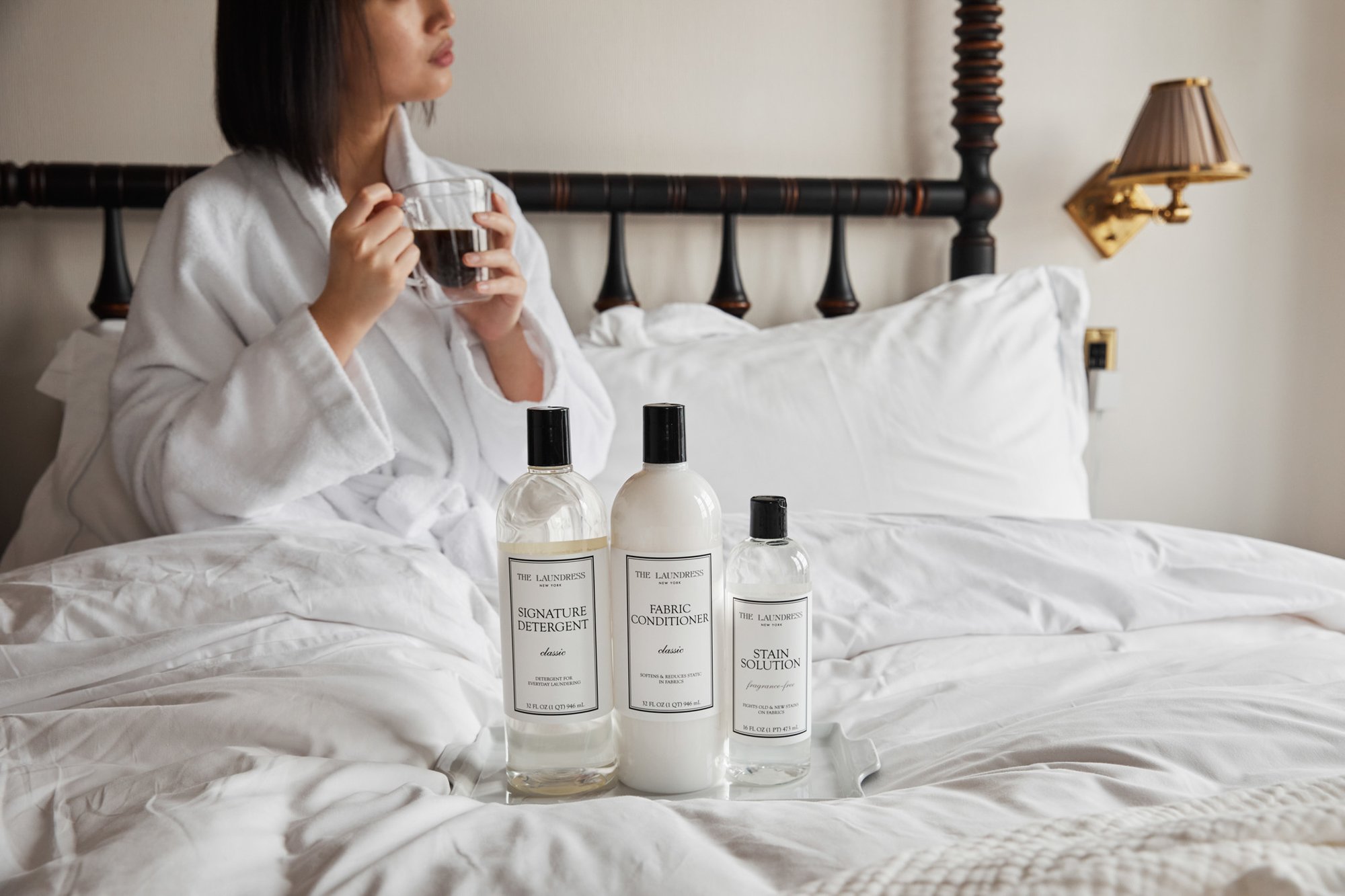
Laundry detergent is a specially formulated cleaner, often featuring surfactants and enzymes, designed to effectively cleanse fabrics and lift stains. Detergents containing enzymes are sometimes labeled as “bio” or “biological” formulations. For instance, The Laundress Signature Detergent is an example of an enzymatic laundry detergent that is also USDA certified bio-based.
Enzymes are crucial in the washing process for everyday fabrics, as they actively combat stains and purify materials. However, certain enzymatic formulas aren’t suitable for delicate natural fibers like wool and silk. It’s therefore advisable to avoid washing wool or silk with standard, everyday detergents.
Laundry soap, which lacks enzymes, differs from regular detergent. It might be marketed simply as “soap” or “wash.” In some regions, this type of laundry soap is known as “non-bio” or “non-biological.” Products like Wool & Cashmere Shampoo and Delicate Wash are examples of enzyme-free laundry solutions.
How Detergents Work Their Magic
Enzymatic laundry detergents incorporate a variety of enzymes, tailored to specific brands. These enzymes are engineered to perform their cleaning duties during the wash cycle. Each enzyme targets a particular type of stain, much like enzymes in our digestive system. For example, a triple enzyme complex, as found in Signature Detergent, is effective against visible and set-in stains, as well as general dirt and oil:
- Protease: Targets protein-based stains such as blood and grass.
- Amylase: Breaks down starch-based stains from sources like sauce, rice, and pasta.
- Mannanase: Addresses gum-based stains found in things like salad dressing, ice cream, and adhesives.
During the wash, these enzymes latch onto various stain particles. The surfactants in the detergent then help to suspend these particles in the water. During the rinse cycle, the suspended particles are effectively washed away.
The Role of Stain Removers
With a multitude of stain treatment products available, choosing the right one can be a challenge. Stain treatments vary in their application and the types of stains they are designed to tackle. Some are intended for pre-treatment before washing, like The Laundress Stain Solution, while others are formulated for spot-treating stains outside of the washing machine.
Enzymatic stain treatments function similarly to enzymatic detergents but may offer a more concentrated formula. The Laundress Stain Solution features a potent triple enzyme complex that can be applied directly to stains before laundering. For optimal stain removal, combine this with Signature Detergent and wash fabrics using the warmest water setting safe for the material.
Fabric Conditioners & Dryer Sheets
Does Fabric Softener Actually Work?
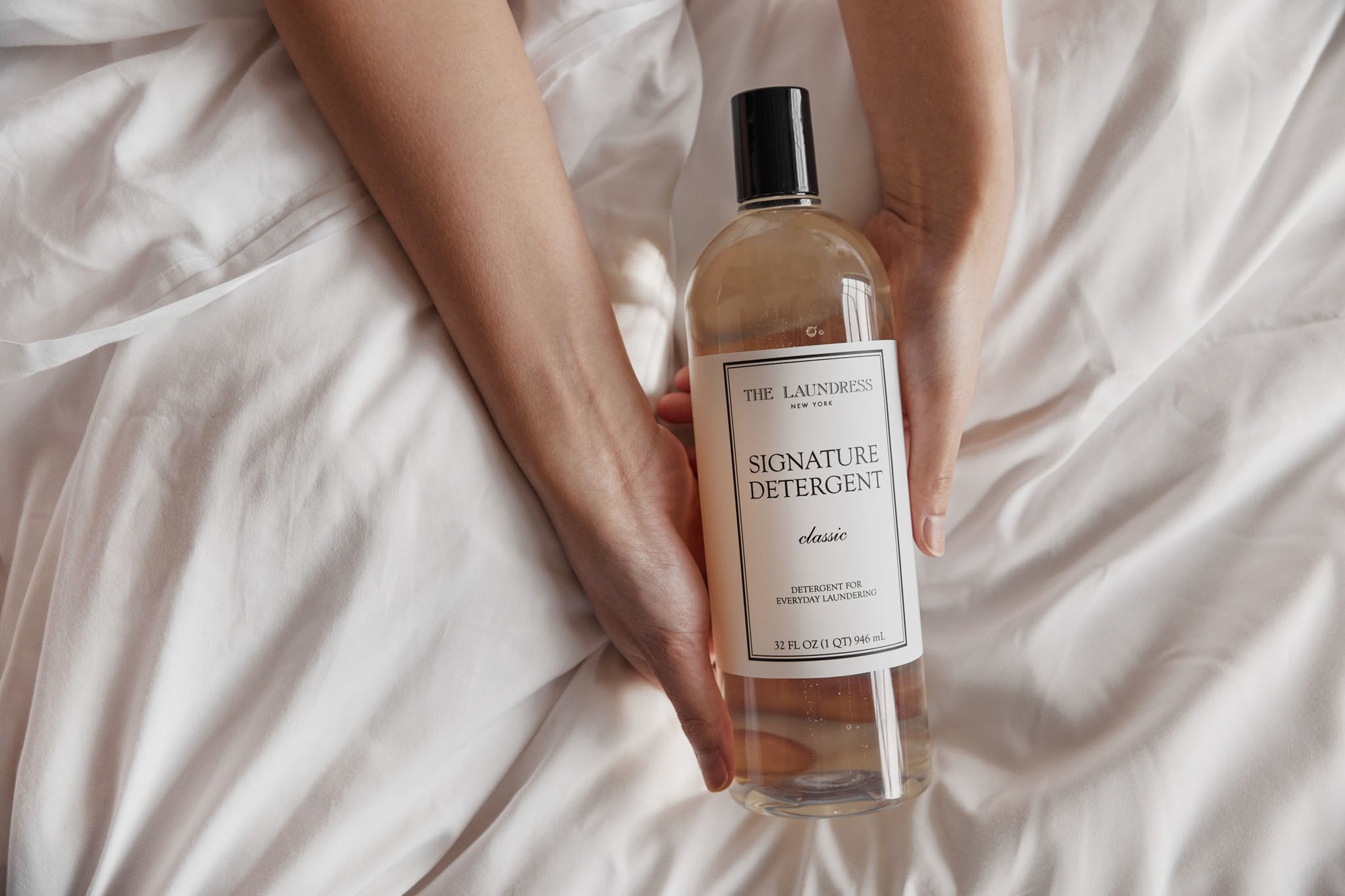
Fabric conditioner, commonly known as fabric softener, is used alongside laundry detergent to enhance fabric softness and minimize static cling. It’s also an excellent way to infuse your laundry with a pleasant scent. The effectiveness of fabric softeners can differ based on the brand and formulation. Opting for a high-quality fabric conditioner, such as Fabric Conditioner Classic, can complement your laundry detergent nicely.
Fabric Softener vs. Dryer Sheets: Which is Best?
Both fabric softener and dryer sheets contribute to softening clothes. Fabric softener is a liquid added to the washing machine’s designated dispenser, typically released during the rinse cycle. Dryer sheets are single-use, non-woven sheets coated with softening agents and static reducers. Both can effectively soften fabrics, allowing you to choose the one that best fits your laundry routine. However, if you use dryer sheets, remember that they can leave a residue inside your dryer, necessitating regular deep cleaning. You can find guidance on how to clean your dryer [here](link to a relevant guide if available, otherwise omit or rephrase as “refer to manufacturer instructions”).
When to Avoid Fabric Softener and Dryer Sheets
It’s important to refrain from using fabric conditioner, fabric softener, or dryer sheets with certain items:
- Flame-retardant materials (e.g., children’s sleepwear)
- Silk
- Knits and woolens
- Synthetics
The coating from fabric conditioners can reduce the absorbency of fibers, making them less ideal for towels. If you prefer the feel of softened towels, consider using softener only occasionally. Additionally, stiff towels can sometimes be a result of using too much detergent.
Alternative Ways to Soften Clothes
Yes, you can achieve fluffier fabrics and reduce static during the drying cycle without using conditioners or dryer sheets. Wool dryer balls, such as the Dryer Balls Set, are a fantastic alternative. These natural woolen balls can be added to the dryer with your laundry to help improve drying efficiency, all without introducing extra fragrances or dyes.