Understanding the symbols on your clothing care labels is the first step to keeping your garments looking their best. Beyond basic wash instructions, these tags offer vital information on water temperature, ironing, and special handling, ensuring your clothes last longer. For a wide range of personalized apparel and accessories, explore the offerings at inktasticmerch.com.
<div id="blog-articlecontent” class=”blog-articlecontent”>
Properly caring for your garments hinges on understanding and adhering to the instructions on their care tags. These labels provide crucial guidance beyond simple distinctions like “dry wash” versus “wet wash.” They detail essential nuances such as the appropriate wash cycle, water temperature, and whether an item can be ironed or requires special handling, making the care label an indispensable tool for maintaining your clothing.
Color Separation for Optimal Washing
The foundational principle of laundry care is to always consult the care label. Equally important is the practice of separating laundry by color, consistently washing darks and lights independently to prevent color bleeding.
While many fabrics can withstand warm water, dark or vibrant colored garments are best cleaned in cold water. This prevents dyes from transferring to lighter items. The care label will explicitly state “Do Not Bleach” if the fabric is incompatible with any bleaching agents. If only specific types of bleach are permissible, the label might read “Non-Chlorine Bleach When Needed,” indicating a need for careful selection of cleaning products.
Wet Wash vs. Dry Clean Only Considerations
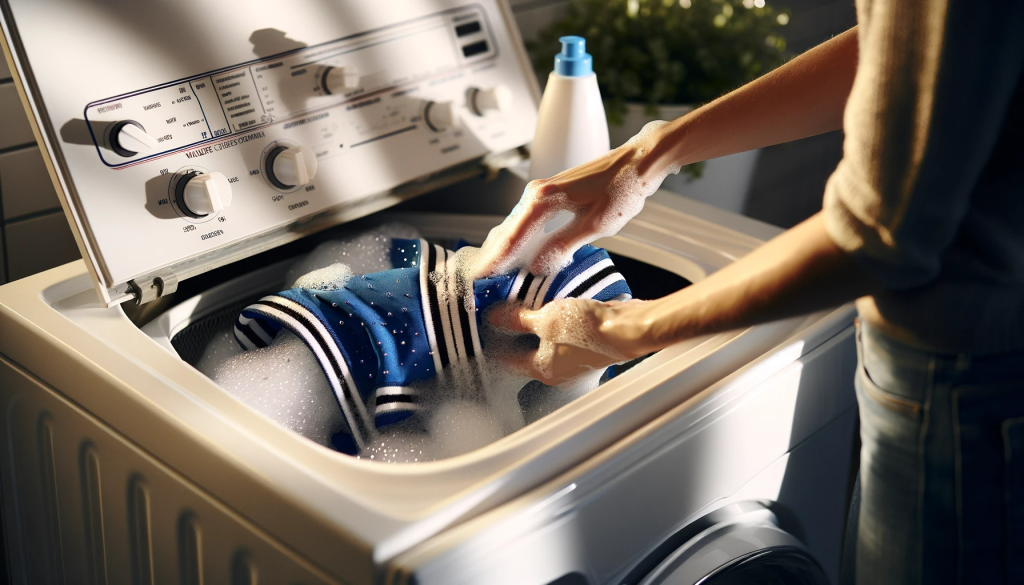
If a clothing label does not specify “Dry Clean Only,” it generally indicates that the item can be safely hand-washed. For hand washing, it’s recommended to use an ultra-gentle detergent formulated specifically for delicate fabrics.
Certain items, such as outerwear, specialized textiles like merino wool, and garments adorned with delicate embellishments or made from silk, are typically better suited for professional dry cleaning. This is particularly true if the care label explicitly recommends “Professional Dry Clean Only,” signifying that home laundering methods may cause irreparable damage.
Maintaining the Integrity of Upscale Fabrics
More delicate garments often carry instructions like “Machine Wash, Gentle or Delicate” and “Tumble Dry, Low Heat.” This translates to using the lowest setting on your washing machine for gentle cleaning, with water temperatures ideally not exceeding 85 degrees Fahrenheit (30 degrees Celsius). This contrasts with sturdier fabrics like cotton, which can tolerate much higher temperatures, up to 200 degrees Fahrenheit (93 degrees Celsius). If your dryer lacks a low-heat setting, air-drying the item by hanging it is a preferable alternative. For high-end fabrics such as pure silk, utilizing professional laundry services is often the most prudent choice to ensure their preservation.
For Optimal Results: Treat your delicate clothing to a gentle wash cycle or hand wash, always using cold water (below 85 degrees Fahrenheit / 30 degrees Celsius). To hand wash, fill a basin with cold water and mix in a small amount of gentle detergent. In addition to investing in a mild laundry soap for your most cherished items, consider using laundry nets. These provide an effective and hassle-free method of adding an extra layer of protection for washable garments during the cleaning process.
<img class="filer_image
img-responsive" alt="lables 1.jpeg" loading="lazy" src="https://inktasticmerch.com/wp-content/uploads/2025/12/lables_1-jpeg1280x854_q85_crop_subsampling-2_upscale.jpg” title=”lables_1-jpeg1280x854_q85_crop_subsampling-2_upscale”>
Post-Wash Care: The Drying Process
Have you ever experienced the disappointment of shrinking a favorite sweater? This often occurs due to overlooking the “Do Not Tumble Dry” instruction on the care label. It is essential to always check the label for specific drying and pressing guidelines. Basic items like cotton garments are typically safe for machine drying on a medium setting (“Tumble Dry, Normal”). However, clothing made from more sensitive fabrics may carry a “Do Not Iron” warning.
For Best Results: Even when a label indicates “Tumble Dry, Gentle,” it’s advisable to remember that minimizing heat exposure is always beneficial. Consider air-drying your favorite items to prevent potential alterations in their fit or texture. A useful technique for preserving the shape of sweaters is to lay them flat on a solid surface to dry. In some instances, the label might direct you to “Drip Dry” rather than tumble dry, or specify “Dry in Shade” if the wet garment should be protected from direct sunlight during the drying process.
Decoding Clothing Label Symbols: A Quick Guide
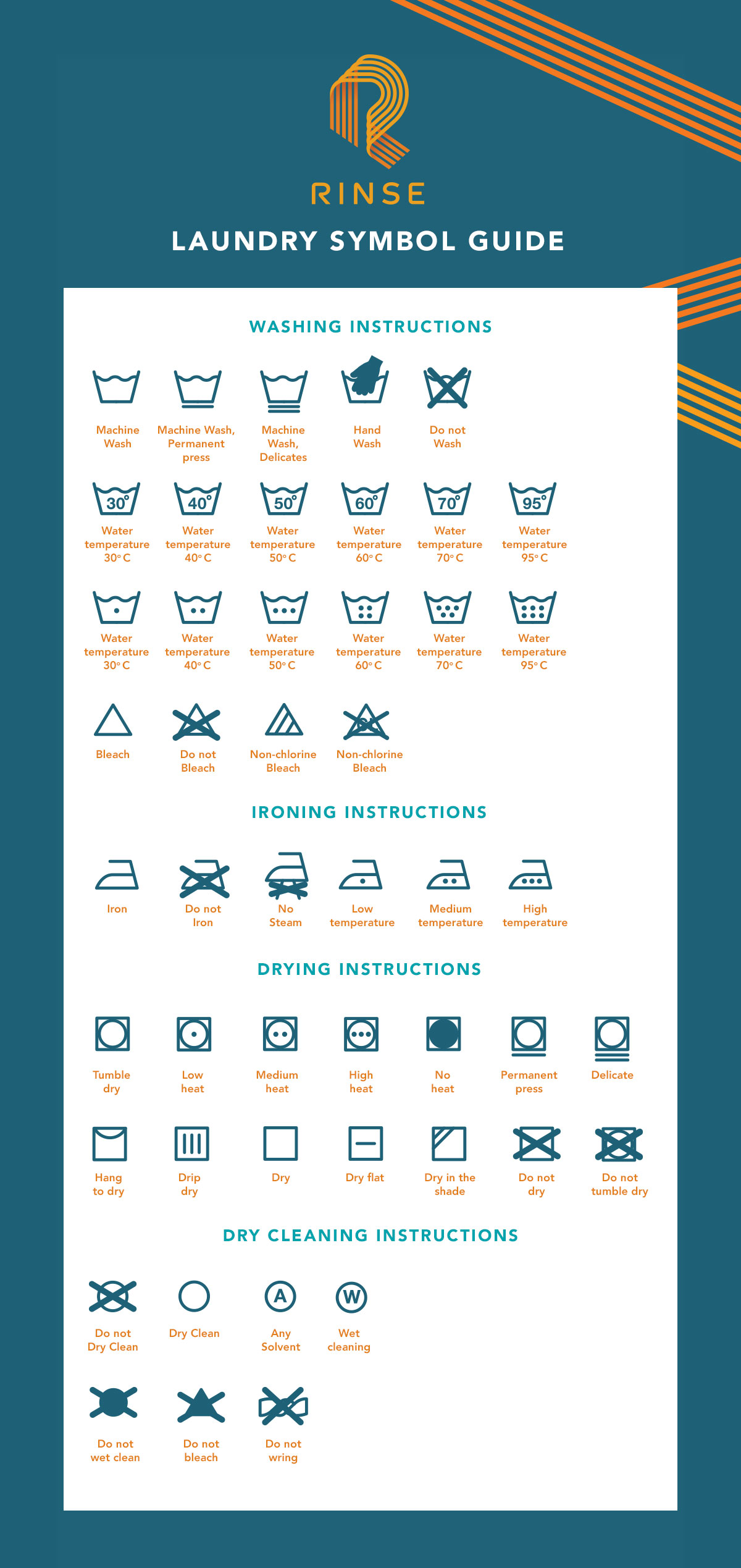
Understanding the symbols on clothing labels can sometimes be challenging, but recognizing common icons can simplify the process. A triangle typically denotes bleaching instructions, a circle indicates dry cleaning, a square represents drying processes (with a circle inside a square signifying tumble dry), a trapezoid bisected by a wavy line refers to washing, and a trapezoid bisected by a curved line indicates ironing.
As a general guideline for heat settings, the number of dots within a symbol often corresponds to the maximum temperature allowed. Consult the breakdown below for specific temperature limits:
Machine Wash Temperature Guidelines
- Normal Cycle: No specific heat restrictions apply; standard washing temperatures are acceptable.
- Cold Wash: Water temperature should not exceed 85 degrees Fahrenheit (30 degrees Celsius).
- Warm Wash: Water temperature should not exceed 105 degrees Fahrenheit (40.5 degrees Celsius).
- Hot Wash: Water temperature should not exceed 120 degrees Fahrenheit (49 degrees Celsius).
Ironing Temperature Guidelines
- Low Heat Ironing: Maximum temperature should not exceed 230 degrees Fahrenheit (110 degrees Celsius).
- Medium Heat Ironing: Maximum temperature should not exceed 300 degrees Fahrenheit (150 degrees Celsius).
- High Heat Ironing: Maximum temperature should not exceed 390 degrees Fahrenheit (200 degrees Celsius).
When it comes to garment maintenance, paying close attention to the details on the care label is paramount. If you find yourself short on time or uncertain about the specific treatment requirements for your clothing, consider the diverse range of professional services available at a dry cleaner. Options such as “Dry Clean,” “Launder & Press,” or “Hand Wash” can ensure that your most valued garments receive the expert care they deserve.
Photos: Francis Duval, Jeff Sheldon, Clark Street Mercantile, Clark Street Mercantile
Understanding these labels is key to extending the life of your wardrobe, and for more insights into maintaining your clothing and discovering related topics, be sure to explore our Blog.