
Understanding laundry symbols is key to keeping your clothes in top condition. These universal icons, standardized since 1971, provide a clear visual guide for washing, bleaching, drying, ironing, and dry cleaning, ensuring your garments last longer. For personalized apparel that can withstand proper care, check out InktasticMerch.
Bringing home a new piece of clothing is always exciting! Before you wear your latest find, it’s a good practice to give it a wash. As you prepare for that first wash, you might notice a collection of curious symbols on the care tag. While these laundry symbols may seem cryptic, they’re actually a vital guide to keeping your garments looking their best.
Understanding these symbols unlocks the secret to proper garment care, ensuring your clothes last longer and maintain their quality. Think of them as a universal language, a clear set of instructions that transcends borders and helps everyone care for everything from everyday t-shirts to delicate fabrics.
The Story Behind Laundry Care Labels
The journey to standardized laundry symbols began in 1971 when the Federal Trade Commission introduced the Care Labeling Rule. This regulation aimed to equip consumers with the necessary information to care for their clothing and textiles effectively. By 1997, textile manufacturers widely adopted these symbols, replacing lengthy written instructions with a concise visual code, giving rise to the laundry care chart we know today.
The beauty of these symbols lies in their universal nature. As laundry machines are used globally, a common visual language was needed. The textile industry settled on five fundamental symbols, forming the core of this global garment care communication. These symbols consistently appear in a specific order on each label:
- Washtub: Represents washing instructions.
- Triangle: Indicates bleaching recommendations.
- Square: Pertains to drying methods.
- Iron: Details ironing procedures.
- Circle: Signifies dry cleaning requirements.
Decoding the Language of Laundry Tags
Learning to read laundry symbols is like learning a new, straightforward language. Once you grasp the meaning behind each symbol, you’ll become a pro at giving your clothes the precise care they need.
Understanding Washing Symbols
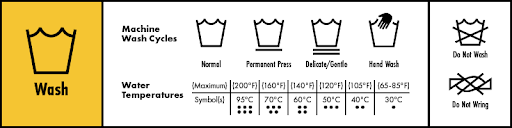
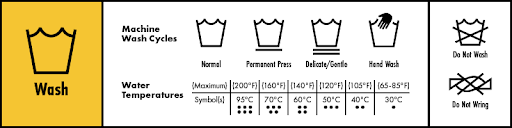
Washing symbols are your key to setting the right water temperature and choosing the appropriate wash cycle for your garments. The number of dots within the washtub symbol typically indicates the temperature – more dots mean a hotter temperature. Lines beneath the tub further specify the cycle type:
- Washtub with no lines: Suitable for a normal wash cycle.
- Washtub with one line underneath: Indicates a permanent press cycle, designed for fabrics that need a gentler approach.
- Washtub with two lines underneath: Signifies a gentle cycle, perfect for delicate items.
- Washtub with a hand symbol: This means the item should be hand-washed.
- Washtub with an ‘X’ across it: Do not wash this item.
- A twisted garment with an ‘X’ across it: Avoid wringing out this item.
Navigating Bleach Symbols
Bleaching symbols are generally represented by triangles and are quite easy to interpret:
- An empty triangle: You have the freedom to use any type of bleach.
- A triangle with stripes: Opt for non-chlorine bleach only.
- A triangle with an ‘X’ through it: Do not use bleach on this item.

Mastering Drying Symbols
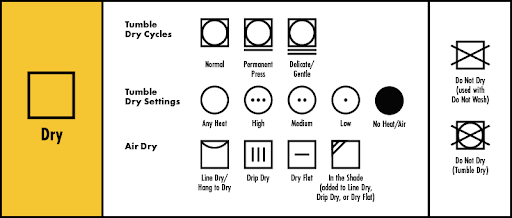
Drying can be one of the trickier aspects of laundry care, but understanding these symbols will help prevent shrinkage and damage. Drying symbols are depicted as squares, often with circles inside:
- A square with a circle in the center: This indicates a normal drying cycle.
- A square with a circle and one line underneath: Use the permanent press setting.
- A square with a circle and two lines underneath: This denotes a delicate cycle.
- A square with an ‘X’ through it: Do not put this item in the dryer.
- A square with a circle and an ‘X’ through it: Do not tumble dry this item.
Just like with washing symbols, dots within the drying symbol (or circle) relate to heat levels:
- A solid black circle: Use no heat or air-only drying.
- 1 dot: Use low heat.
- 2 dots: Use medium heat.
- 3 dots: Use high heat.
- 0 dots: Any heat setting is acceptable.
Decoding Ironing Symbols
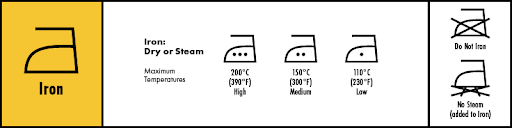
The ironing symbol is visually straightforward – it looks like an iron. Dots on the iron indicate the recommended temperature:
- An iron with one dot: Use a cool setting.
- An iron with two dots: Use a warm setting.
- An iron with three dots: Use a hot setting.
- An iron with an ‘X’ over it: Do not iron this item.
- An iron with lines emanating from the bottom and an ‘X’ over them: Do not use steam when ironing.
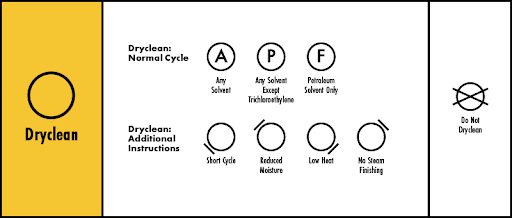
Interpreting Dry Cleaning Symbols
A simple circle symbol signifies that the item is suitable for dry cleaning:
- A circle with an ‘X’ through it: This item should not be dry cleaned.
- Circles with letters inside: These letters specify the types of cleaning solvents that can or cannot be used.
- Circles with lines on the outside border: These indicate any special instructions for the dry cleaner.
What Information Must Appear on a Care Label?
Legally, laundry symbols must provide clear instructions for washing, drying, and cleaning the garment. While manufacturers are only required to list one safe cleaning method, the care tag also serves to alert you to how certain procedures might potentially damage your favorite shirt, tailored trousers, or any other apparel.
Caring for Your Garments with Thoughtfulness
For items marked with dry cleaning symbols, understanding the best approach to garment care is key to preserving their quality. Learning these laundry care tips empowers you to make informed decisions, ensuring your clothes receive the attention they deserve and maintain their integrity for years to come. Whether it’s a favorite graphic tee or a special occasion outfit, proper care is a form of self-expression, allowing you to showcase your style with confidence.
Share on Social
Now that you’re equipped to decipher any laundry tag, explore more practical tips and guides in our Blog to keep all your apparel looking its best.